Losing a loved one far from their home country brings many doubts and feelings of uncertainty. In those difficult moments, understanding the steps to follow can help you make decisions with calm and confidence.
This guide clearly and practically explains what happens when a foreign national passes away in Spain, what legal steps are required, and how Serveis Funeraris Mallorca can help you manage the entire process.
First steps after the death of foreigner in Spain
The role of the authorities and the consulate or embassy
When a foreign citizen passes away in Spain, the first step is to obtain the medical death certificate and contact a funeral home. The next step is to inform the consulate or embassy of the person’s country of origin. They can:
- Advise you on the repatriation process
- Provide contact with accredited funeral homes
- Handle registration with the consular civil registry

Funeral and repatriation costs to take into account
The associated costs depend on several factors: type of service, distance, health permits, and consular fees. For this reason, it’s important to request a detailed estimate that includes:
- Basic funeral services
- National or international transportation
- Documentation and administrative fees
With this information, the family can decide whether to hold the farewell ceremony in Spain or repatriate their loved one to their home country.
The importance of an international funeral insurance policy
Having funeral insurance with international coverage can greatly simplify the process. Insurance companies usually cover transport expenses and document management.
If there is no policy in place, a specialised funeral home such as Serveis Funeraris Mallorca can take care of all formalities and provide personalised support at every stage.
Documentation and legal procedures required
Certificates and official registrations needed
For any foreign death in Spain, the basic documentation includes:
- Medical death certificate
- Registration in the Spanish Civil Registry
- Literal death certificate
For international transfers, you will also need a health authorisation and special permits for the transport of remains or ashes. It’s advisable to keep copies of all documents for later use in the country of origin.
Legalisation and translation of documents
To ensure these documents are valid outside Spain, a sworn translation and the Hague Apostille (or consular legalisation if the country is not part of the convention) are often required.
What happens to the assets and inheritance of a foreigner who dies in Spain?
Applicable law depending on the country of origin
As a general rule, succession is governed by the deceased’s habitual residence unless they have chosen the law of their nationality. When assets exist in different countries, it’s highly advisable to seek legal advice from professionals specialising in international inheritance law to ensure all documentation is properly coordinated.

What if there is no will?
If no will has been made, intestate succession applies, which involves:
- Identifying the legitimate heirs
- Collecting the necessary supporting documents
- Arranging the declaration of heirs before a notary or competent authority
Having a lawyer experienced in international succession law can greatly facilitate the process and help prevent conflicts between different legal systems.
How can SFM assist you in the event of the death of a foreign national in Spain?
When a foreigner passes away in Spain, having specialised professionals by your side is essential. Serveis Funeraris Mallorca provides comprehensive care for both local and international families, offering empathy and efficiency throughout the process. Its main services include:

Columbariums and graves
We have different spaces in cemeteries designated for columbariums and graves for urns. These spaces allow you to pay tribute to your loved one in a physical and permanent place.

Urn in cemetery
We offer the option of urn storage in cemeteries, where it is protected in a dignified and accessible space. This option is ideal for families who want to have a place, but without purchasing a full grave or columbarium.

Transfer of ashes
Sometimes families wish to have the ashes laid to rest in a different place from where the cremation took place. At Serveis Funeraris Mallorca, we offer a specialised ash transfer service, complying with all legal, health and transport requirements.
Transport and repatriation of remains
Serveis Funeraris Mallorca coordinates the repatriation of remains or ashes with consulates, airlines and health authorities. The process includes obtaining all required certificates, preparing the coffin or urn in accordance with international regulations, and ensuring reception in the destination country.
The funeral home maintains constant communication with the family, even if they reside abroad.
Inhumation and cremation
If the family prefers to hold the farewell ceremony in Spain, Serveis Funeraris Mallorca organises personalised services and manages the inhumation or cremation, always respecting the beliefs and traditions of each culture.
After cremation, ashes can be kept or scattered in different ways, depending on the family’s wishes and applicable regulations.
Administrative management throughout the process
In addition, Serveis Funeraris Mallorca takes care of all official paperwork: certificates, permits, legalisations and translations. Thanks to their experience, families can rely on an efficient and transparent management of the entire process.
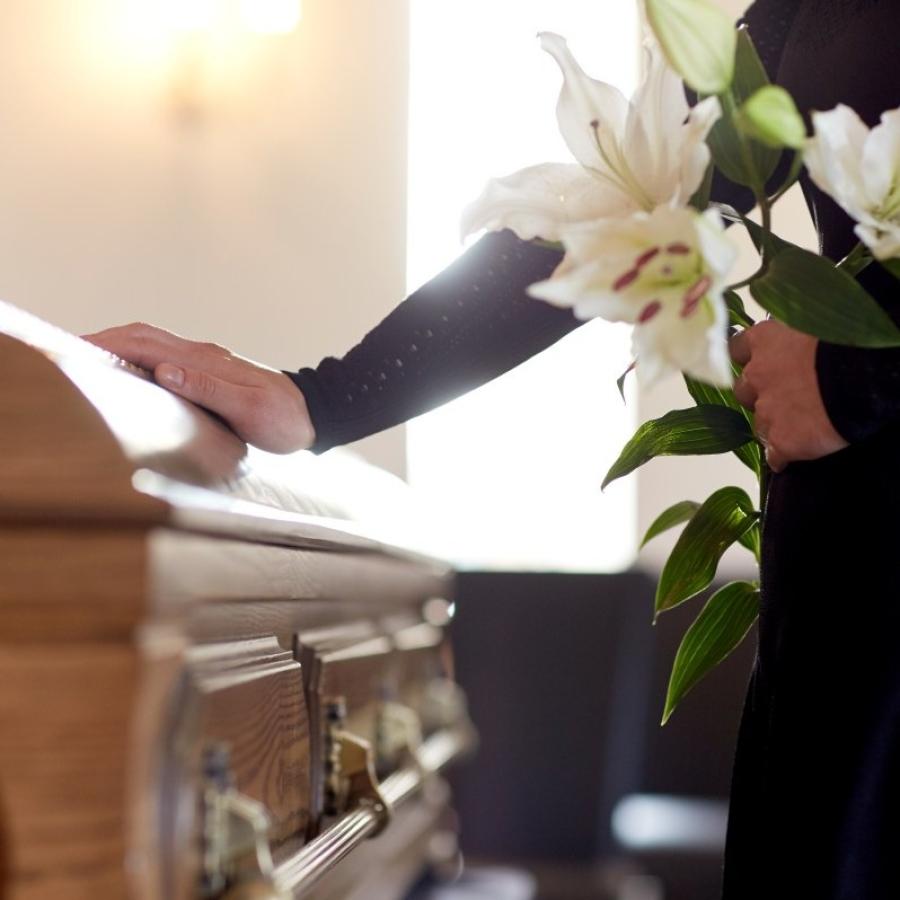
The importance of emotional support after the loss of a loved one
Coping with grief from a distance
Being far away can make the grieving process more difficult. Simple actions can help, such as:
- Taking part in the ceremony virtually
- Writing farewell messages or letters
- Creating a shared digital memorial space
It can also be beneficial to seek psychological support or join bereavement groups in your country of residence.
Personalised ceremonies and symbolic tributes
Personalised ceremonies are a meaningful way to bring cultures together and honour your loved one’s memory. At SFM, every detail is cared for: readings, music, cultural symbols or family rituals — all adapted to the family’s wishes.
Frequently asked questions about what happens when a foreigner dies in Spain
Where is the death of a foreign national registered in Spain?
The registration is carried out at the Civil Registry of the place where the death occurred and, if applicable, also in the consular registry of the deceased’s country of origin.
Can a relative abroad handle the funeral arrangements in Spain?
Yes. With formal authorisation, a funeral home can represent the family, manage documentation and coordinate repatriation or the ceremony.
What support does a funeral home like SFM offer in these cases?
Serveis Funeraris Mallorca provides comprehensive support: documentation, consular coordination, repatriation or farewell ceremonies in Mallorca, and emotional guidance for families.
Would you like more information about our services?
If you have any further questions about how cremation works or would like to know more about our services, at Serveis Funeraris Mallorca we are at your disposal to assist you.